




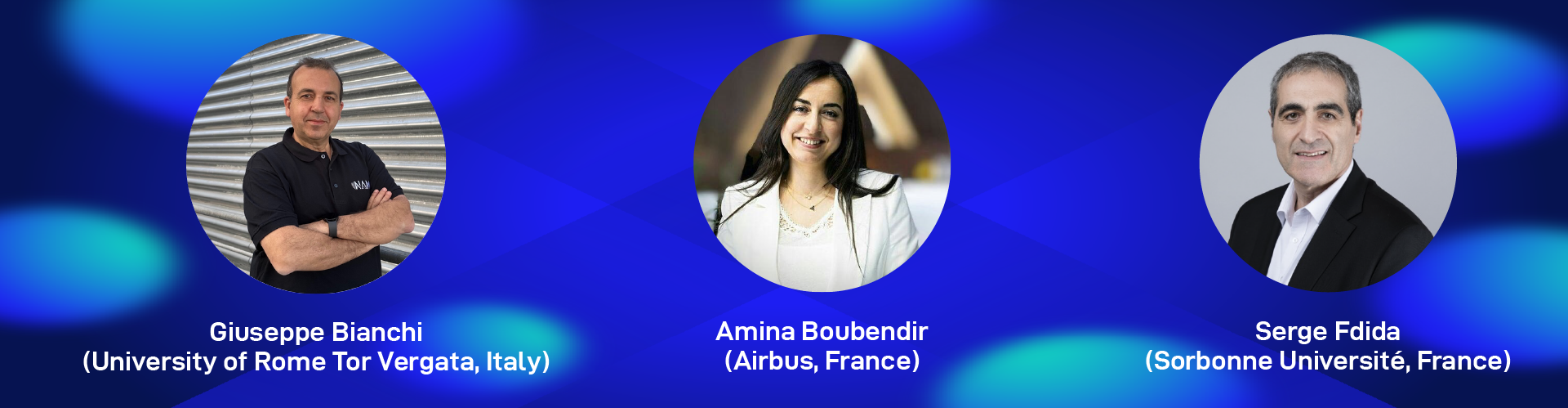






Keynotes
Keynote #1:
Title: From sniffing signals to manipulating reality: Air Interface Security in 5G and ISAC
Abstract: What happens when wireless signals no longer just carry data, but actively sense and describe the physical world? With the advent of Integrated Sensing and Communication (ISAC), 5G and beyond networks become pervasive, large-scale instruments for observing reality itself. This raises a fundamental question: how can we safeguard the integrity of the physical environment inferred from wireless signals? This talk focuses on the emerging threat surface introduced by ISAC, spanning not only privacy but also security concerns. On the privacy side, residual risks such as physical-layer leakage, traffic inference, and 5G NR sniffing highlight how information can still be exposed despite advanced protections. Even more critically, ISAC enables a new class of attacks where adversaries can actively manipulate sensing signals to inject, move, or conceal objects, effectively altering the aimed perceived reality.

Giuseppe Bianchi
(Full Professor of Networking and Network Security at the University of Rome Tor Vergata, Italy)
Bio: Giuseppe Bianchi is Full Professor of Networking and Network Security at the University of Rome Tor Vergata since 2007. He is the founder and director of the CNIT National Laboratory of Network Assurance and Monitoring (NAMlab). He has authored over 300 peer-reviewed publications with more than 25,000 citations, and is internationally recognized for fundamental contributions to wireless system performance evaluation, including the ACM SIGMOBILE Test of Time Award. He has coordinated or technically led 6 large EU projects, as well as several additional European and national initiatives. He holds more than 10 patents in security, programmable networks, and wireless systems, and has served as chair/editor for leading IEEE/ACM venues.
Keynote #2:
Title: 6G Space-Terrestrial Integration: Pathways for Direct-to-Device
Abstract: 6G is driving a structural shift towards integrated Terrestrial and Non-Terrestrial Networks (NTN) — spanning aerial platforms, HAPS, and multi-orbit satellite constellations — as the foundation for ubiquitous coverage, resilient connectivity across critical domains such as logistics, emergency response, navigation, and surveillance. The keynote examines the architectural and technical foundations of TN–NTN convergence, focusing on Direct-to-Device (D2D) connectivity as its defining outcome. It addresses the system-level requirements this convergence demands: multi-orbit and multi-provider service aggregation, cross-technology interoperability, and automated infrastructures capable of dynamically composing connectivity across domains.
The keynote will detail views on representative use cases, the state of the art and open challenges — key enablers for D2D, architectural models for integration, and the role of network softwarization in multi-provider orchestration — alongside progress in relevant standardization bodies. It closes with a forward-looking perspective on the research and engineering priorities shaping space-terrestrial convergence towards 6G

Amina Boubendir
(Head of Research and Standardisation Airbus Defence and Space, France )
Bio: Dr. Amina Boubendir is Head of Research and Standardisation at Airbus Defence and Space. She leads the research and technology activities on secure satellite communications, 5G/6G NTN connectivity, software-defined networks, automated AI-based systems, and earth observation. Sitting at leadership boards, Amina oversees cross-national military and governmental satellite solutions and Airbus contributions to major European and global SDOs like, 3GPP, TMForum, ETSI, and IEEE. She represents Airbus at the European Smart Networks and Services JU and at the 6G Industry Association. She is a member of the Advisory Group of the European 6G Flagship Hexa-X I and II. Amina led a number of research and standardisation projects and is a senior telecommunications expert acting as member and chair at key scientific committees. Amina holds a PhD in networks and computer science from Télécom Paris, multiple awards, and a publication record of 40+ publications.
Keynote #3:
Title: The SLICES-RI post5G Blueprint, experimenting 6G research design at the time of AI.
Abstract: The scientific community working on next-generation networks and systems increasingly lacks advanced, sustainable open tools to validate research, accelerate discovery through data sharing, and support reproducibility. The rapid pace of academic production—driven by data-intensive methods and the fast adoption of AI/ML—makes validation challenging. The intent-driven SLICES-RI is the first initiative designed as a sustainable scientific instrument under the European ESFRI framework, which supports the complete lifecycle of experimental research—from concept to reproducible deployment—by enabling experiments to be executed over its infrastructure through standardized blueprints, and by collecting, archiving, and documenting all outputs following a rigorous methodology. A key challenge lies in creating a seamless, continuous mechanism translating scientific excellence into competitive advantage at the pace of innovation. SLICES-RI addresses this by enabling virtual access through an open data management infrastructure and defined workflows. The importance of data, scale and diversity, motivates the interest for building foundation models that will have a strong transformative role in the design of open research infrastructures. Our most advanced SLICES-RI Blueprint, dedicated to beyond 5G and 6G, is the appropriate environment for building network foundation models. This talk presents the SLICES instrument, its community and roadmap, highlighting its openness and potential for collaboration. We will focus mostly on its 6G Blueprint, Metadata registry system (MRS) and its evolution towards processing the AI pipelines with suitable LLM, agentic AI and MLOPs management.
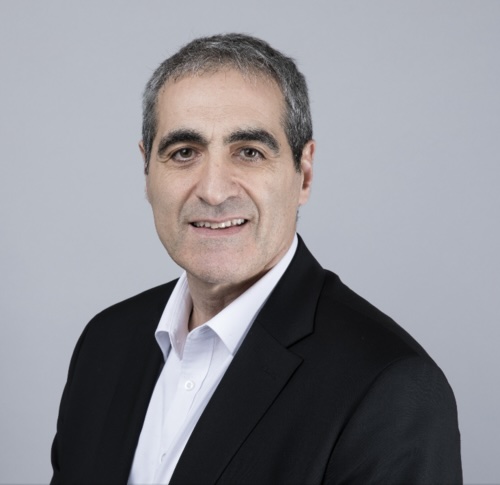
Serge Fdida
(Professor, Sorbonne Université, France)
Bio: Serge Fdida is a Professor with Sorbonne Université, Paris, France. He is a member of the French Academy of Technology, an IEEE Fellow and an ACM Sigcomm Distinguished Scientist. He has been leading many research projects in Europe, notably pioneering the activity on federated Internet testbeds. He established PlanetLab Europe in 2007 and the OneLab and FIT facilities. He steered the successful SLICES initiative, the first large-scale scientific instrument in Digital Sciences, that entered the ESFRI roadmap in 2021. He was one of the initiators of the ACM Conext conference, general chair of ACM Mobicom 2015, IEEE Infocom 2019 and in 2021 and started the NetworkingChannel online program. Serge Fdida also developed a strong experience related to innovation and industry transfer: – co-founder of the Qosmos and Hopcast companies, – leadership role to the creation of the Cap Digital cluster in Paris, President of EIT Health France and coordinator of the 4EU+ European University. He also developed a strong experience in the governance of Higher research and education organizations: Vice-President European affairs University P&M Curie (2014-2018); Vice-President International Development of Sorbonne Université (2018-2021).
.