










SCIN Invited talk
Invited talk
Title: The role of knowledge representation in next generation communication systems
Abstract: Next-generation communication systems are expected to evolve from infrastructures designed primarily for data transport into distributed intelligent systems in which communication, sensing, learning, and decision making are increasingly intertwined. In this setting, the key question is no longer only how efficiently data can be transmitted, but how information should be represented so that it can be interpreted, aligned, and effectively exploited by heterogeneous intelligent agents. This talk will discuss this transition from data to knowledge, focusing on three closely related ingredients: representation, alignment, and semantic communication. We will examine how semantic and goal-oriented communication motivate compact representations that preserve the information relevant for inference and action, how such representations can be aligned across different agents and modalities, and how relational and structural information can help capture the context in which meaning emerges. These ideas point toward future AI-native networks in which devices and edge agents do not simply exchange data, but progressively build, share, and refine representations of their environment in support of cooperative intelligence and goal-directed decision making.
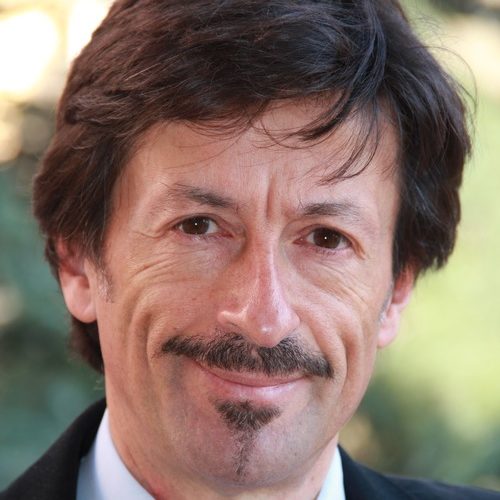
Sergio Barbarossa
(Sapienza University of Rome, Italy)
Bio:Prof. Sergio Barbarossa (Life Fellow, IEEE) is currently a Full Professor with the Sapienza University of Rome and a Senior Research Fellow with the Sapienza School for Advanced Studies (SSAS). He has been a scientific coordinator for several European projects. He is coordinating a national project on network intelligence. His main current research interests include topological signal processing and learning, semantic and goal-oriented communications, 6G networks, and distributed edge machine learning. He is an EURASIP Fellow. He received the IEEE Best Paper Awards from the IEEE Signal Processing Society in 2000, 2014, and 2020; and the Technical Achievements Award from European Association for Signal Processing (EURASIP) Society in 2010. He served as an IEEE Distinguished Lecturer from 2013 to 2014